Is Bullet Journaling a Helpful Tool For You?

bullet journalIn today’s busy world, where we have to keep track of lots and lots of information, almost anyone can benefit from bullet journaling. This particular system of staying organized has some unique properties that make it particularly helpful for people who thrive on lists and appreciate a non-digital system. Here’s a quick rundown to help you decide if bullet journaling is right for you.

If You Use To-Do Lists Bullet Journaling May Be For You

If you’re a fan of to-do lists and have one sitting at your desk or your kitchen counter, then a bullet journal may work very well for you. Think of it as a large, ongoing to-do list that also helps you keep track of appointments, grocery lists and the likes. And since it’s all in one journal, no more frantic searches for that little list that held everything you needed to do today. (That is unless you misplace your journal – but that will be a bit easier to find than a piece of scrap paper).

If You Are Looking For An Analog System Bullet Journaling May Be For You

Our electronic devices are great, but sometimes you want to go back to pen and paper. If you want an organized, easy to deal with system that requires no batteries or Wi-Fi, then this will be a good fit for you.

Even if you think your Google Calendar handles everything for you, I would like to encourage you to give this a try. There’s just something about writing things down by hand that helps us process them differently.

If You’re Looking For a Creative Outlet Bullet Journaling May Be For You

If you are looking for a creative outlet but you just don’t have the time to sit down and sketch, paint, or create, then bullet journaling may be a good fit for you. As you plan your day, you can let out your creative side as you doodle and decorate your daily pages. Of course this is completely optional.

If You Feel Like You’re Keeping Track Of Too Much “Stuff” In Your Head Bullet Journaling May Be For You

Do you have a constant running tally in you head of everything you need to do and remember today? That takes up a lot of brain space. A bullet journal may be the perfect solution because it helps you jot down all those appointments, to-dos, meetings, and ideas you don’t want to forget as they come up.

Writing them down allows you to forget about them and stop running that constant long list of stuff in your head that you need to remember. Just think of what you can do with all that extra brain capacity and how much less stressed you’ll feel when you stop to worry about forgetting something.

If You Need Something Mobile Bullet Journaling May Be For You

A big advantage of the bullet journal is that it’s nothing more than a notebook and a pen. You can sit down anytime, anywhere to plan, check on your progress through the day, or add a new line item. There’s no need to hunt down a power outlet and it works just fine in bright sunlight.

Frankly it’s nice sometimes to unplug and get some thinking done away from your computer or smartphone.

Even if you don’t count yourself in all or even most of these groups, I encourage you to give it a try. You may not think of yourself as a list or “pen and paper” type person, but may find that this is just what you needed to stay on top of everything that’s thrown at you on a daily basis.

Although you can effectively use bullet journaling with a simple notebook, it is helpful to look at what’s available for ideas and possibilities. To here to explore what’s available, both in how-tos and purchased bullet journals:  Bullet Journaling for You?


Creating and Sustaining an Effective Wellness Routine

Wellness

Do you have a wellness routine? Creating or recalibrating a wellness routine is a do-it-yourself project that addresses our individual, unique needs. Cultivating wellness in our lives is a mindset as well as specific actions and routines.

So much of “healthcare” in our country is sick care – identifying what is already affecting us negatively and figuring out to treat it.  The prevention that we are encouraged often focuses on things like eating right and getting enough sleep and exercise. Of course, these are important. But there is more.

Beyond the physical practices, mental and emotional self-care are key to wellness. Sometimes self-care is seen as self-centered and even selfish. I hope you see how important it is to staying healthy and strong and available for others in your life. Having a wellness/self-care routine that fits your needs is important to the totality of your life.

Reject Extreme Goals, Adopt Sustainable Habits

I recently found an inspiring article which summarizes the approach used by wellness coaches Manda and Meleah Manning. They advocate “forming intuitive, sustainable habits rather than chasing extreme goals.” (You know, like eat no sugar or carbs, workout every day, no pain no gain approaches, meditate for thirty minutes or more daily, etc.)

The article describes four practices that can bring more balance into every part of a wellness routine: start a morning routine, make time to meditate, journal mindfully, and try energy cleansing. The first three are ones we’ve all heard about before. They are described in the article in some unique ways that you may find helpful.

The last one, energy cleansing, is new to me.  It is simple, doesn’t take a long time and is highly effective according to coaches.  They recommend this daily morning and evening routine: “Begin the day by ‘visualizing yourself safe and protected within a golden egg of light, almost like a forcefield’…. At the end of the day, think about releasing anything you don’t need anymore. ‘You can do this be visualizing yourself standing underneath a waterfall and feeling the cleansing water wash over you, cleansing your energy from the crown of your head out through the soles of your feet.’”

These energy cleansing practices are meditative techniques using the power of visualization and centering. Perhaps you find that many recommended techniques involve more time than you are willing or able to commit. These do not require much time at all. I love the image for each – golden egg of light in the morning and waterfall in the evening. No need to refer to a source article or book – remember the images and the accompanying thoughts will come to you once you have done it a couple of times.

If you lack a self-care/wellness routine, or are ready to revamp what you have, check out the article,  “Build Balance Into Your Wellness Routine With These Expert-Recommended Practices” by Annalise Mantz.

In addition, here’s a possible tool to consider. A Year of Self-Care, Daily Practices and Inspiration for Caring for Yourself by Dr. Zoe Shaw provides a daily practice that will take you about 15 minutes. Start whenever you want and see where it takes you.

Ideas for Valentine’s Day in a Pandemic

HeartsI have previously written about how those not in a couple might enjoy Valentine’s Day: https://carolbrusegar.com/planning-your-valentines-day-singles/ But this is not a typical year. This is Valentine’s Day in a pandemic!

Perhaps the day has sneaked up on you as it has for me, given all that’s going on these days. If so, many sources have come up with ideas to help us. For your convenience, here are links to a few places to browse; there are some duplicated ideas, but also different ones in each:

https://www.townandcountrymag.com/style/home-decor/g35031389/quarantine-valentines-day-ideas-at-home/  This has some great fun photos to go along with the ideas for a chuckle or two.

https://www.goodhousekeeping.com/holidays/valentines-day-ideas/g35140980/quarantine-valentines-day-ideas/

https://parade.com/1150777/marynliles/virtual-valentines-day-ideas/  These are all virtual ideas – a variety of types.

https://people.com/lifestyle/how-to-celebrate-valentines-day-2021-coronavirus/  Ideas for both couples and those celebrating alone.

https://www.chicagoparent.com/play/holiday-fun/ways-to-celebrate-valentines-day/  If you have children.

https://www.funwithkidsinla.com/post/fun-smart-ways-you-can-celebrate-valentine-s-day-2021-and-be-safe-too  More family ideas.

https://www.goodhousekeeping.com/holidays/valentines-day-ideas/a30472475/galentines-day-quotes-instagram-captions/   Galentines Day quotes, etc. Fun stuff.

The People Magazine article ends with these words, which I wholeheartedly endorse:

Most importantly, remember that it’s just another day. Whether you’re alone or celebrating with your partner in a way that you hadn’t imagined, just remember that Valentine’s Day is just another day to show the people around you that you love them and to show yourself some love. The less pressure you put on it, the less stressful it will be … and once it’s over, you’ve got one thing to look forward to: all of that discount Valentine’s chocolate to buy.”

Using Mind Mapping to Declutter Your Brain

mindmap

Decluttering our space, at home or at work, as a group or individual effort, is a much-touted strategy. You may have watched a few hoarder reality shows on TV and either been inspired or assured that your own clutter isn’t THAT bad.

Perhaps you have undertaken the task of decluttering your computer, deleting unwanted files, and organizing your desktop for maximum efficiency. You may have a regular schedule of doing that throughout the year. But have you thought of decluttering your brain?

Very few people think of their brain as a computer, if they think about it at all. Yet, the brain is a supercomputer and extremely powerful in the way it can make connections. It can also get overwhelmed and sometimes confused. Human beings tend to absorb tons of information and hold onto bits that are of no use and may even be harmful to their thinking.

There are ways to do minor brain decluttering, such as journaling or making tiny to-do lists. For large scale decluttering, mind mapping is an extremely effective strategy.

You may be familiar with other uses for mind mapping, particularly to brainstorm and plan. But using it to declutter your brain is very powerful. Here are areas of life where decluttering may be especially needed.

Relationships

Complicated relationships tend to overwhelm the brain and cause negative thoughts to develop like weeds in your yard. Those negative thoughts overtake the positive thoughts and clutter the brain with images that bounce around like a box of golf balls dropped from 100 feet. The thoughts are suddenly all over the place. When we speak of relationships, we are talking about significant others, children, friends, and even co-workers. A mind map allows you to take the core problem and then drill it down to find solutions. All the thoughts regarding the relationship are in front of you, placed in an organized process rather than helter-skelter.

Information Overload

We take in a lot of information from what we read, see, and hear. In today’s world, we are bombarded with information, and we do not need all of it to function daily. All this information bouncing around in your head causes serious clutter. Mind mapping helps you to put down the pertinent information you need right now, information you want to record and be able to access at another time, and discard what you don’t need.

You may have a large-scale work project, and the information is coming fast and furious. You may even find people giving you input that is not related to the project you are working on.

Mind mapping that project drills down to what is needed and what is not. It will also help you to organize and create new ideas that will help with your project. Working on a project without using a mind map means you may forget things that are in your head but not at the front and center of your thoughts. Capturing them and connecting to them to where they can be used is a great function of mind mapping. It’s a great part of an effort to declutter your brain.

Organizing Your Thoughts

With so many things to do in a day, your thoughts can become disorganized, and the clutter becomes overwhelming as your brain skips from project to project, relationship to relationship. This can be especially true when we are doing so many things virtually and there are not the usual clear delineations between home, work, school, etc.

Mind mapping eliminates the clutter as you have a focus point, which is the center theme in your mind map. Building out the main branches and sub-branches is similar to creating a well-written outline for a non-fiction book. By the time you complete all the branches, you can see where your thoughts are, what the route is, and where the journey ends. All the distractions are moved aside or deleted, and this will serve to declutter your brain and provide clarity and direction.

Mind mapping can be used as a daily tool as well as for longer time frames. Experiment with it and see how effective it is in decluttering your brain and helping you feel more in control.

I have written previously about mind mapping here:

https://carolbrusegar.com/creatively-planning-with-many-unknowns/

https://carolbrusegar.com/mind-mapping-enhances-innovative-thinking/

https://carolbrusegar.com/transforming-years-after-50-introducing-mind-mapping-multi-purpose-tool/

If you really want to learn about mind mapping from the originator of the technique, Tony Buzan published this just a couple of years ago. It’s a distillation of global research that has happened in the 5 decades since he first created this technique.

Mind Map Book - Buzan


Mind Map Mastery: The Complete Guide to Learning and Using the Most Powerful Thinking Tool in the Universe 


I’m Carol Brusegar, author, photographer and curator of information. My focus is on gathering and writing on topics that enhance all our lives – regardless of our age. Topics include health and wellness, personal development, innovation and creativity, and a variety of helpful, practical tools and practices. I have a special interest in helping people over 50 years of age to create their 3rd Age – the next stage of their lives – to be the best it can be.

Follow me on Twitter!     Follow me on Instagram!   Follow me on Pinterest!

  Follow me on Facebook!         Visit my Etsy Shop!


Using the Pomodoro Technique to Help You Accomplish More

Are you looking for strategies and techniques to be more efficient and productive? Many of us are managing more and/or different responsibilities than we were a year ago. Things continue to change. Are you looking for new things to try that will make things just work better as you go about your daily life?  Check out the Pomodoro Technique for managing time and increasing productivity. Perhaps you have never heard of it, or perhaps it’s something you tried in the past. It may be beneficial to circle back around to see if it is useful in your present situation – or if it is new to you, try it out.
The Pomodoro Technique is a popular and long-used (for over 30 years) approach that utilizes alternating periods of work and short breaks to maximize how much you get done each day. Each work period is called a pomodoro, from the Italian word for ‘tomato.’ Francescco Cirillo created the technique as a university student and named it after the tomato-shaped kitchen timer he used. (Thus the graphic at the top if this post!)

The concept doesn’t sound too earth-shattering, but its structure is effective and many people find they feel surprisingly good at the end of the day – rather than feeling exhausted at the end of a day of productivity.

The basic technique or pattern is 25 minutes of work and a five-minute break. After four cycles of this, you take a longer 30-minute break.

Taking regular breaks gives your brain a chance to relax and reset. Knowing that you only have to work for a short period of time makes it much easier to stay engaged and motivated. What could be simpler?

The technique works well with intellectual, manual, and creative tasks. You can use it for housework, homework and studying, as well as many job-related tasks. You’ll find that you can accomplish much more in 25 minutes than you ever thought. The Pomodoro Technique will also enhance your ability to focus and concentrate.

Tips for Effectively Using the Pomodoro Technique

Utilize a timer. It’s a mistake to keep one eye on the clock while you’re trying to get your work done. Use a timer and position it so you co see if can’t see it. You can use your cell phone, computer, or a physical timer.

  • There are several specialized programs and apps for your computer or cell phone available online. They incorporate your work time, break time, and longer breaks. Search for “pomodoro productivity timer.”
  • The use of a timer is critical. It provides a sense of urgency and the knowledge that you’ll get a break soon. See how much you can get done in 25 minutes. You’ll be surprised.

Experiment with different intervals. Many people thrive with the traditional schedule of 25 minutes of work alternated with five-minute rest breaks. Others do well with 50 minutes of work and 10-minute breaks. See which works best for you. Consider trying other options, too. You may find that certain tasks work better with longer or shorter intervals. It’s important to experiment and be flexible in your approach.

Ensure that you take a longer break every two hours. This can be 15-30 minutes in length. It’s a good idea to move around. Get a drink of water or take a short walk. Avoid skipping this longer break. It will really pay off later in the day! You’ll have more energy and maintain your ability to focus.

Avoid distractions. Part of the effectiveness of the technique is from focusing intently on the task at hand. You’ll have a quick break in just a few minutes, so keep your mind on track. Let others know you don’t want to be disturbed. Remember, you’re not doing anything but your work for the next 25 minutes

That’s all there is to it. Give the Pomodoro Technique a try for a few days and compare how much you get done, and how good you feel, to your normal day. See if you find it effective and feel more refreshed at the end of the day as many people do.

Tools and More Information

The Pomodoro Technique is a straightforward approach; yet there are tools to facilitate its success for you. As noted above, phone apps are available. Some advocate using a physical timer rather than a phone app.  Simple kitchen timers can work and there are timers specifically designed for this purpose – like cube timers. Check out the options here: https://amzn.to/36jIX57 Books with more information and planners are available there also.


Steps to Control the Email Monster

Perhaps you manage your emails well, but I struggle with that. It seems that there are emails, emails everywhere. I have multiple email addresses which complicates the situation. As we begin a new year, I want to once and for all manage them better by taking steps to control the email monster.

First, a look at the challenge. I know that being curious and an information hoarder is one of the factors in my own email overload. There are so many email lists that address topics that interest me in all aspects of my life – health, business, personal development, politics and current events, etc. I’m always interested in learning more. Thus the numbers of subscriptions increase regularly and more emails appear in my inbox. I have found some suggestions and have identified some to implement now.

Initial Steps

The first step I took was to delete emails that are outdated. Now this may not be something you would EVER do, but I had hundreds of thousands of emails – yes, it’s true – going back 2-1/2 years in my primary email box. Most were dated material. I sorted by date and just deleted the oldest ones without really looking at them. Then I did a quick scan to see if there were personal emails that I wanted to archive and deleted the rest, up to the last six months or so. Then I sorted by subject and was able to delete groups of emails and keep the most recent and any to archive before sending them to the trash box.

The next step, one that will be continuing for a few weeks, is to unsubscribe from lists and newsletters I don’t read. I have too often just scrolled past many of these emails but allowed them to continue to accumulate. After doing an initial unsubscribe blitz, I continue to review what comes in daily to identify additional lists to drop. For maintenance, I will be trying to go through to identify those I haven’t read in 30 (or 60) days, delete emails that have accumulated and unsubscribe from the list.

Establish Daily, Weekly, Monthly Habits

I’m working to establish habits for managing email. Each day, my goal is to take action on emails that come in rather than just scroll past with the thought that I’ll come back to them. This is when I am identifying additional lists that I am not actively using and unsubscribing and deleting past emails. For those with dated, often daily information (like sites offering free or sale ebooks daily), I quickly open, scan, glean what I want and delete.

Often there is an offer of a workshop, webinar or product. These I either act on immediately or flag so I can come back at the end of the day or within the timeframe of the offer if I can’t make an immediate decision. If emails require replies, I do that immediately if possible or flag them for response later.

Some subscriptions contain information I want to archive for future projects. These I quickly review and save into specific folders, getting them out of my inbox.

In addition to the daily practices, I will each weekend go back and delete or otherwise act on items that have served a purpose during the week but are now outdated – for example reminders of upcoming classes, webinars, and events that have now occurred.

I am going to experiment with using a general “save” folder for items I want to delay acting on but want out of my inbox and clean that out monthly. I think this will serve dual purposes: reducing the clutter in my inbox and knowing where to find them more easily when I want to. I suspect that a good number of these will never be acted upon and will be deleted at the end of the month.

With these steps and others that I may try, I am confident that I can make great progress to control the email monster!

Additional Strategies to Consider

Here are some additional suggestions to control the email monster that may be worth considering, depending on your situation:

* Create a “Spam” Address – an email address that you’re going to check on either a weekly or monthly basis. Use this when you sign up to get a freebie that puts you on an email list where you may or may not have time to read the messages. That leaves your regular email address cleaner.

Extract Important Info – Sometimes I leave emails in my box to save important information and flag them. An alternate strategy is to extract the info and put it into a database or a folder in your documents that you can label so it can be easily located. If it doesn’t seem worth that effort, perhaps it can be deleted.

Set Up a Shopping Folder – When you shop online, you get receipts, warrantees, additional offers, etc. Each of these can be a subfolder under your shopping folder. To save receipts for tax purposes, label the subfolder with the tax year. Then filter or sort all receipts into that folder. Then they will be handy when you need them.

Set Up Filters – Most email programs can filter information so that before you even look it’s labeled a certain way. Gmail does this automatically into primary, social, promotions and you can add updates and forums in your settings. Explore the options provided by your email service.

Each new year, I seek out resources that will help me be and do what I choose. Here are two books that you may want to check out:


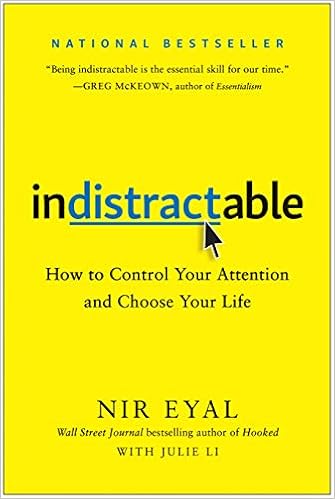
Indistractable, How to Control Your Attention and Choose Your Life by Nir Eyal. (National Bestseller, Included in the Top 20 Best Business and Leadership Books of the Year 2019 by Amazon, Goodreads Best Science & Technology of 2019 Finalist)


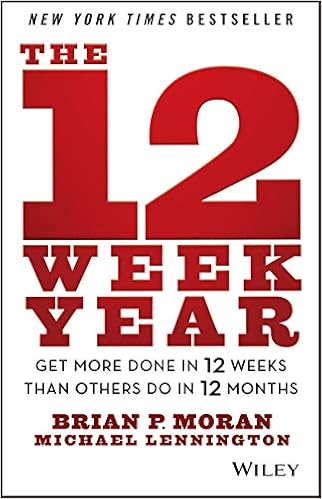
The 12 Week Year by Brian P. Moran. The 12 Week Year creates focus and clarity on what matters most and a sense of urgency to do it now. In the end more of the important stuff gets done and the impact on results is profound.


The Year the Hugs Went Away

Hug


“A hug is a wonderful thing. It’s a marvelous gift to share. It’s a grand way to say; ‘I care.’ A hug communicates support, security, affection, unity, and belonging. A hug shows compassion. A hug brings delight. A hug charms the senses. A hug touches the soul.”

~  Unknown

2020 – the year the hugs went away. What a year it has been!  As a person living alone, I have lacked anyone in my own safe-at-home household to hug for all these months. A few “back hugs” – arms around the shoulders from behind – have been a brief taste of the real thing. Are you in that situation? Who do you know who is?

Individuals have different attitudes about hugging. Some reserve it for intimate relationships within the family – and may even be limited in that expression there. Others – like myself – identify themselves as huggers and apply them generously.

A major venue for hugging for me in the past several years has been within my faith community where we are unapologetic master huggers. Across all the boundaries that often separate us, we hug – genuinely and warmly. The hugs express acceptance, affirmation, inclusion and love. In these months, the hug deprivation is real.

We have stayed with virtual gatherings all these months in commitment to the safety of all of us and of those with whom each of us is connected. We have rejected the modified form of gathering has been adopted by some churches – fewer people, distanced and masked. The risks are not worth it. It’s nearly impossible for me to imagine being in the same space with these dear people and not hugging them. And so the physical separation continues for the well-being of all.

What is so powerful, so profound about hugs? There has been much research done, and the conclusions include the physiological and the psychological impacts. According to “The Power of Hugs: Benefits to your Health” in SteptoHealth.com, hugs release several hormones in our bodies. Hormones are substances produced by one tissue and transported by the bloodstream to another tissue to affect physiological activity. Oxytocin, the attachment or bonding hormone, is released by hugging, as well as serotonin and dopamine, which have a sedative or calming/wellness impact. The impacts of hugs can even be as specific as reducing blood pressure and easing a headache, strengthening the immune system or helping you overcome fear. It is also noted that these effects can persist long after the end of the physical contact.

Psychologically, hugs cause the brain to release endorphins – any of a group of peptide hormones found in the brain that act as neurotransmitters. They promote healing and create feelings of well-being, build self-esteem and bring joy.

We’re missing a lot when we aren’t hugging! Until we can safely hug, what can we do to prevent negative physiological and psychological impacts of hug deprivation? Hilary Jacobs Hendel, LCSW says, ““The paradox of hugs is that though they are quintessentially physical, they can also be enacted mentally. I often invite my patients, if it feels right for them, to imagine someone they feel safe with, including me, holding them. This works because the brain does not know the difference between reality  fantasy in many ways.”

This form of visualization can have a profound impact on us. It flips the script from focusing on the absence of and need for physical hugs to creating at least some of the positive impacts through the power of our minds and imagination. We can remember and recreate nurturing and healing hugs to help tide us over until it’s safe to do in person, in real time.

Will you try it and encourage others who are missing and needing physical hugs to do the same?

Perhaps you’d like to express your virtual hug materially to some special people; check out some options here:

http://carolbrusegar.com/Hugs-Gifts

How the Pandemic is Changing a Holiday Outreach to Prison Inmates

TG in Arkansas

Hours riding in vans, loading and unloading equipment at nine different locations, going through prison security nine times, set-up and waiting, greeting hundreds of inmates, preparing and facilitating communion at each location. That has been my experience of the week after Thanksgiving for the past several years. Being part of Timothy’s Gift Christmas Tour to multiple correctional institutions during that week has become an anticipated and cherished part of the holiday season. It’s a holiday outreach that touches those who visit as well as those visited in profound ways.

The purpose of the tour is to deliver a message of hope and affirmation that each person is loved and not forgotten. Those who experience the program of music, words, personal greetings and affirmation have expressed the power of it. Letters from inmates we receive indicate impacts well beyond the ninety minute program at each location.

Enter the Pandemic

But not this year. The pandemic has, of course, halted such programs into prisons. The absence of this tour has created an emptiness for me and others who regularly participate. Seeing photos and remembering experiences in institutions in different states over the years – Arkansas, Ohio, Florida – accent the vacancy this has left. As I look at the faces in the photos, I think about what life must be like for the inmates now.

It’s difficult to even imagine the impact of the pandemic isolation of the past months in a correctional institution. We have certainly felt the impacts of stay-at-home orders over the months. In prisons, during the worst days, they have been confined to a single location with almost no time outdoors to get exercise. Food was brought to cells and barracks, no educational programs were available, no work assignments that normally  helped pass the time, no church or group meetings for inspiration and comfort, no visiting allowed by loved ones.

The normal activities have opened up as much as has been possible in the past months, depending on the location and the virus statistics there. As on the outside, restrictions may have been lifted and then re-imposed. Precautions are still necessary and very limited visitation of family is generally allowed now. It’s impossible, however, to know how long it will be before outside programs will be allowed and when people will be comfortable going in.

Plan B for Holiday Outreach

Thanks to the genius of Timothy’s Gift founder Ron Miller and people he engaged in the project, a different kind of holiday outreach has been created for this unusual year. Since we can’t go in person, a DVD of a Christmas program including music, spoken word, and humor has been professionally produced. It has been sent to 62 prisons in Florida and Arkansas for them to show to groups and to be available for individual viewing!

We look forward to getting feedback from inmates, administrators and staff of the institutions about this holiday outreach. The DVD will reach many more people than a program in rooms with limited capacity could reach, and in so many more locations than can be visited in any one tour. Although this approach lacks the impact of “when I was in prison you visited me,” it is a way of touching hearts and minds with a message of care. Hearing that they are not forgotten – even in the midst of a pandemic – is important, in whatever way it is possible to get the message.

If you are interested in learning more about Timothy’s Gift, go here:  https://www.facebook.com/timothysgift/community/ for photos, comments from inmates and more.  To support Timothy’s Gift, go to http://timothysgift.com/donate


Developing a Flexible Mindset When Uncertainty Reigns

MindsetHere we are in a persistent time of uncertainty and change. The months continue to go by in succession. One of the most needed things as we move forward is developing a flexible mindset in a time when uncertainty reigns. It’s always an asset, but now essential for our mental health.

What is a flexible mindset? It’s not being wishy washy or indecisive. It’s being able to bend without breaking. You can change your thinking to overcome obstacles and challenges without failing or breaking down. A flexible mindset allows you to explore more options. You can see multiple solutions to a problem or new situation and examine the impacts of each of them.

The situation of the past months of the pandemic have forced all of us to be flexible and make changes not necessarily of our own choice. Whether you see yourself as having a flexible mindset or not, you have had to respond and adapt to changing circumstances.

There are strategies to proactively develop that flexibility rather than be forced into it. Here are a few to consider as we move forward:

Embrace the Unknown. When an obstacle appears, think of this as an opportunity rather than a defeat. What could you learn from this, if not immediately then in the longer term? This is a reframing of your thoughts and automatic reactions. Try out some new ideas and look for the benefits rather than grudgingly complying with a solution imposed on you.

Let Go of Old Ways. These past months have interrupted our habits and routines in ways we could not have imagined. Our brains use the same neural pathways and connections over and over in our daily and weekly routines. It’s comfortable. Perhaps you are still feeling resentment over some specific changes that is preventing you from being open to new ways of doing things. Letting go of them opens you to being creative about current and future options. We may never to back to “normal” as we remember it.

See Obstacles as Opportunities. These times give us the opportunity to look at new possibilities that indeed can be better and healthier as we move forward. Even simple daily tasks might be done differently. Developing a flexible mindset means that you can try out things you’ve never done before. This can be applied to just about any situation. You might look at additional options for things that have been imposed upon you.

Recognize the Benefits of Developing a Flexible Mindset. As you go through this process be sure to recognize the impact on your life that developing a flexible mindset is having. You will likely feel more creative and confident in solving problems and situations you face in the future.

Our mindsets deeply affect how we handle life. If you would like to learn more, I recommend this book by Carol S. Dweck:  Mindset: The New Psychology of Success: https://amzn.to/32H90A2

I’m Carol Brusegar, author, photographer and curator of information. My focus is on gathering and writing on topics that enhance all our lives – regardless of our age. Topics include health and wellness, personal development, innovation and creativity, and a variety of helpful, practical tools and practices. I have a special interest in helping people over 50 years of age to create their 3rd Age – the next stage of their lives – to be the best it can be.

Visit my Amazon Author Page to see the books I have available.  

The Power of Sound to Calm and Heal

Power of Sound

The power of sound to calm and heal has been known for centuries. Sound is extremely effective for helping us manage stress, overwhelm and anxiety. Music is one category of sound, and you may find certain kinds of classical or jazz music calming. While driving my grandchildren from school recently, the local classical radio station played some lovely music and my twelve-year-old grandson commented at least twice about how relaxing it was and asked how to find the station. I was a bit surprised and delighted to hear that.

Nature sounds are another category – waterfalls, bubbling brooks, chirping birds, falling rain, and ocean waves are all calming. Of course, actually experiencing them in nature is wonderful, but recorded and simulated versions are readily available. Perhaps you have used sound machines to help a baby, child or yourself get to sleep. They generally have a similar selection of options to choose from in addition to white noise. Use of a sound machine can be part of sleep training for children that establishes lifelong patterns.

As you noticed in the list above, water is a common inclusion. Taking time alone to simply breathe and allow the calming effect of water to permeate your mind can be powerful. You have probably noticed large water installations in commercial building lobbies. As you walk in, it has a visual and auditory impact. A waterfall or bubbling brook can be included in a yard or garden to add to the ambiance if you have a large space and the resources to do it. There are many options for small indoor fountains/waterfalls that can be used in a bedroom, meditation room, office or any small room at a range of prices. Indoor Water Installations

Discovering the Sounds That Work For You

As with so many things, what is effective for one person may not be for another.  If you would like to try out different sounds to see what is most calming, relaxing, and/or sleep inducing, here are two options:

+ Amazon.com has a variety of CDs, many of which offer a “Listen Now” sample that you can experience immediately.  Some are also available to stream if you are an Amazon Prime member – no CD required. Check it out here: Sound Therapy CDs

+ Free apps are available here, as well as in other places:  https://www.makeuseof.com/tag/10-calming-apps-destress-clear-mind/ Discover what works best for you.

Trying Frequency Sounds to Calm and Heal

The power of sound is reflected and verified in scientific studies. Advanced techniques like frequency sounds which include both healing sounds and binaural beats are available to explore through recordings and apps too. They are effective in reducing stress and in healing. An article in AwarenessAct.com points out that “Frequency sounds can be used to help us as human beings calm down. This is especially important since we’re facing a lot of stressful things right now. We’re seemingly stuck within a huge crisis and it feels like things are going to get worse before they get better…Sound healing, for the most part, is something that uses vibrations through vocal measures or even instruments like gongs to get music that can really work to calm.”  https://awarenessact.com/frequency-sounds-to-calm-you-down-during-times-of-crisis/

At the above link there are several videos holding different healing sounds and binaural beats. Some are hours long so you can have them playing in the background during the day or through the night. Please note the instructions about whether or not headphones are needed to get the full benefit of a particular video.

I am hopeful that this introduction to the power of sound to calm and heal has been helpful and has ignited your interest in using it for yourself and others. Try something new and share what you discover.