Are You A Worrier? Managing Worry In Difficult Times, Part II

worry 4

 “Worrying is carrying tomorrow’s load with today’s strength – carrying two days at once. It is moving into tomorrow ahead of time. Worrying doesn’t empty tomorrow of its sorrow, it empties today of its strength.”  ― Corrie Ten Boom

Many of us consider worry a given.  It may be, as a friend often says, “Worrying about my children and grandchildren is a mother’s job. It’s what we do.” Or it may be accepting it as part of what your parents imprinted upon you as worrying was a strong part of their mode of living. “I just can’t help myself.”  I personally reject those characterizations.

Taking Control of Your Worries

While it may not seem like it, it is possible to take control of your worries. With a little patience, practice and persistence, you can become calmer and learn how to take control over your worry as soon as it starts to occur.

Here are some of the best ways to do that.

Create a plan

Having a plan in place to combat toxic worry can be very helpful. For this, you’ll need to write down all of the things you’re worried about. I suggested doing that in the previous post, http://carolbrusegar.com/managing-worry-in-difficult-times-part-i/.

Then consider what kind of worry each is – generalized, perfection, fear of making  mistakes, social or post-traumatic stress worry. (These are described in Part I.) Knowing this will help you in the next steps.

Once you have your worry list, you can start to think of ways to reduce them. How can you eliminate the worry and what steps will you need to take? Creating a little to-do list of things you can do to reduce the worry, and then ticking off the tasks as you do them will help you feel more in control of the situation.

Arm yourself with facts

You’ll often find that toxic worry stems from either a lack of information or the wrong information. You could be worrying about something that you don’t fully understand or have adequate information about.

So, if you want to take control, arm yourself with facts. Learn everything you can about the thing you’re worrying about. The more knowledgeable you are about the thing you’re worried about, the less you’ll actually worry.

One of the most difficult things about these times is that there either aren’t “facts” available or there are differing opinions which people claim as facts. Perhaps part of your worry is how to deal with these discrepancies as you make personal decisions. So taking steps to put boundaries around your worries can be helpful.

Allow yourself small worry windows

It may not be possible, or even healthy, to never worry about anything. Particularly in times of great uncertainty, there can be a role for non-obsessive worry. Make time to acknowledge your worries. Set aside small windows of time each day and train your mind to worry only during these designated periods.

Then, once the time is up, you aim to forget about your worries for the rest of the day. This allows you to use your time to take some action or just be in the present and enjoy what is. This creates a much healthier balance, ensuring you aren’t burying your head in the sand, but you also aren’t letting your worries take over.

Challenge your thoughts

When you start to notice those negative worrying thoughts, challenge them. It’s common to make your worries appear worse than they actually are – jumping to the worst-case scenario. Most of us are really good at asking what if this or that bad thing happened and dwelling on that.

Leave yourself open to the possibility that things won’t be as bad as you think. Identify healthier, more positive ways to look at the situation. Look at what the probability of the worst-case scenario happening is. Also look at whether the worry is helping or hindering the situation. If it isn’t helping, why are you giving it the power to control you?

Interrupt the cycle

Sometimes, you just have to interrupt the cycle. When you catch yourself worrying over something, turn your focus to something else.

Four things many people use effectively are exercise, meditation, deep breathing, listening to particular kinds of music, and reading.

Overall, toxic worry can have a significant impact on your health and wellbeing. However, there are ways to tackle and control it. The above are some of the best things you can try to take control over toxic worry and start living a happier, healthier life, even in these times of uncertainty.

You will find options of music for relaxation and meditation that can help interrupt the cycle and manage your worry here: Music for Relaxation and Meditation

https://amzn.to/3eeJtST

ARE YOU A WORRIER? MANAGING WORRY IN DIFFICULT TIMES, PART I

Are You a Worrier

Do you find yourself worrying a lot these days? It may be related to the broad effects of the pandemic or to the specific effects on our personal lives. When there is great uncertainty, worry multiplies.

Worry is a word that we use a lot. Let’s use this definition as a base: to give way to anxiety or unease; allow one’s mind to dwell on difficulty or troubles.  As a noun, worry is a state of anxiety and uncertainty over actual or potential problems and it can be toxic, affecting every part of your life.

Why does it happen?

There are a lot of things that can contribute to toxic worrying. The most common include:

  • Feeling vulnerable and insecure
  • Lack of control
  • Negativity breeds negativity
  • Anxiety disorders
  • Stress

That pretty much describes our situation today, in my opinion. Although we use one term, there are different types of worrying. Which one(s) affect you most?

Generalized toxic worry

With generalized toxic worry, there is no one cause. You’ll worry about everything from finances to relationships. The worry is continuous, and it really impacts your day to day life.

This is actually the most common type of worry. You’ll find it hard to get a break from the worry and anxiety, and there may be no particular trigger.

Perfection worry

None of us are perfect. However, those suffering with perfection worry tend to feel like they should be. You’ll scrutinize everything you do, berating yourself for not doing better.

It could be perfectionism at work, at home or within your social circle. We all want to manage the various aspects of surviving in these times with perfection but there are new challenges with work, home, school and more. While a little perfectionism can actually be healthy, too much quickly becomes toxic.

Fear of making mistakes

Fear is a common emotion, but it can easily take over your life. This is especially true when you’re scared of making mistakes.

The truth is, we all make mistakes and it is how we learn from them that makes us better ourselves. In a time when so much is changing and there are no models or blueprints to use, this can be a particularly common type of worry. It’s important that we do our best in each situation and know there will be mistakes made as we try to find our way.

Social worry

With social worry, you’ll typically find yourself worrying about how you come across in social situations. You’ll feel uncomfortable around people and fear being judged by those around you.

There are different levels of severity with social worry. It may simply make you feel uncomfortable and anxious while you’re out. Or, in severe cases it could make you avoid social situations completely.

Post-Traumatic Stress Disorder

In some cases, toxic worry can be related to post-traumatic stress disorder. While this is the least common type of toxic worrying, it can still be a potential cause. With this type of toxic worrying, it occurs after a stressful and traumatic experience. These days in a pandemic could be triggering some previous time – an accident you’ve suffered, a time of economic crisis, or a death of a loved one for example. To avoid going through the experience again, your mind starts to worry more. Post-traumatic stress disorder is a serious condition which may call for professional treatment.

Why recognizing your toxic worry is important

The different types of toxic worry have a slightly different impact on your health and well-being. They also require a different form of management. Some will require professional help, while others can be managed successfully by yourself.

It is only after you have identified the type of toxic worry you’re experiencing that you can work on how to get past it. Toxic worrying can have a debilitating impact on your life.

What kind of worry are you experiencing?

A first step is to write down all the things that you are worrying about, which type of toxic worry it is, and how frequently it is happening. Write a bit more about each one to understand it better. In an upcoming post, I will suggest some ways to manage worry in your life.

If you are ready to dig into this more right now, consider this book:

The Worry Cure, Seven Steps to Stop Worry From Stopping You


Dealing With Our Fear In Times of Great Uncertainty

Fear and uncertaintyFear is a strong word. Sometimes we can admit we are fearful of things. Other times we couch it in terms like concern, trepidation, unease, apprehensiveness, or dread. Whatever you name it, there are plenty of things that may fall into these categories in this year of uncertainty and change.
It may have to do with employment and income, care of children and their educational arrangements, health and recovery, family relationships affected by limitations of interaction and more. You can certainly identify some things that have been upset, turned upside down, lost or threatened during this time of pandemic. Some of those cause us to be fearful of what is ahead.

Given our reality, fear and its related emotions are a given for most of us. Though we can’t see the future, or really plan for things very well as things continue to change, we can explore ways to face and manage those emotions and all that flow from them.

Here are four tips for facing your fears and some resources that can provide more practical direction.

Break it down and take baby steps

Identify one area of life where you have fears. Break it down to specific things you can address. This can be most easily done by doing some writing or journaling. You may want to start by listing all the things that cause you concern and then choosing one area that you can dig into more. Realize that getting started on how you think about this and what the possibilities are is a significant step.

Take steps to get support or assistance – you don’t have to do this alone

If you aren’t already sharing and discussing your concerns and fears with others – family, friends, colleagues – identify people to fill this role. In some instances, professional advice from a coach, mentor or other appropriate person may be most helpful. Make sure that these are more than gripe sessions, although there is always a role and a time for venting. Then move on.

Accentuate the positive

This can truly be a challenge some days, can’t it? Anything you do to avoid getting into a negativity spiral which tends to increase a sense of helplessness and paralysis is critically important. Actively identify what’s going right in your life and what positive effects and awareness has come with this altered reality. Start or continue a gratitude journal which can remind you when you have those down days.

Look toward the future with a hopeful, positive mindset and expectation. Although you may not know what it will look like or how to get there, trust that things will work out. It may be helpful to look up some stories about people who came through challenging times and get inspiration and ideas from them.

Take control of the story

Make a decision that you are and will be brave and confident through these times. As the negative things spin around in your head at times, take action to not let them take control. A helpful technique is to make a list of those thoughts and then for each one, write a positive to replace it. Focus on your skills, strengths and potential to shift your thoughts.

These four things can make a difference in how you continue through these times when very few things are “normal” and we don’t know how things will evolve. In addition, I encourage you to check these resources for dealing with fear (and all its related emotions).

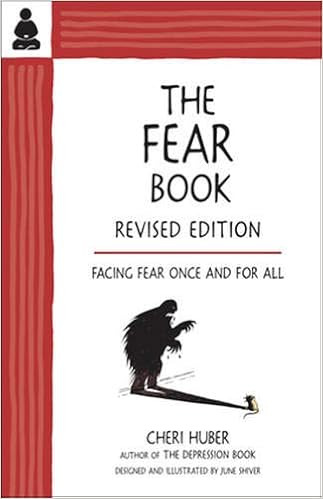
The Fear Book is described this way by a reviewer: “One of the best books ever written. I never get tired of it. Perfect for all ages. Extremely helpful. Puts real therapeutic knowledge into simple language to understand. Very motivating, positive, and calming. You will not be disappointed with this book!”

https://amzn.to/37TN7QF

Feel the Fear…and Do It Anyway is described this way by a reviewer: “I learned that fear stops us from becoming greater versions of ourselves, and the importance of not necessarily becoming fearless, but to change your mindset and telling yourself it’s okay to be afraid, be compassionate with yourself, and replace the negative inner voice with a positive one….”

Feel the Fear and Do It Anyway®: Dynamic techniques for turning Fear, Indecision and Anger into Power, Action and Love by [Susan Jeffers Ph.D.]

https://amzn.to/3erDZFf

Finally, here is a great blog post by Henri you may also find helpful: “33 Powerful Ways of Overcoming Fear … Right Now” which has been updated just a couple of months ago.  https://www.wakeupcloud.com/overcoming-fear/

These are challenging times and we will make it through by encouraging and assisting each other through it. May these thoughts and resources be helpful to you.

Creatively Planning for a Season With Many Unknowns

Question Mark - PuzzleAs we move into the official summer months of 2020, our normal anticipation is drastically changed. Things that we typically spend time doing, whether for adults or children, may be cancelled or modified – or still have unknown status.  Plans we had made or things we anticipated doing are questionable or changed. Some things that are available may not feel safe yet. And things could revert back to more restrictions if the infection rates rise too much with re-opening. It’s very hard to plan right now.

This has at times paralyzed me – I don’t know how to look forward, even to the next 3 months. So I often go from day to day feeling numb. Have you had that experience?  What can we do?

Creativity in this situation is important and needed.  Yet we may feel as though we have used up a lot of our creative potential just getting through the past 3 months. Managing just the maintenance of daily life – especially if there are children in the household – has required lots of innovation.

How can we re-activate our creative juices as we edge into the summer months with few of the normal anchors and expectations?

I suggest mind mapping as a tool that can release creativity and engage the entire household. Mind mapping is a two-dimensional technique that uses imagery, drawings and color to help us tap into both sides of our brains. It is an alternative to the outline and list making techniques we often use. This powerful tool helps us visualize tasks or ideas, come up with new possibilities as we brainstorm, and organize our thoughts.

Mind Map


Basics of Mind Maps

Here are the steps to do simple, hand-drawn mind maps.

  • Gather plain paper, colored pencils, markers, or crayons.
  • Choose a topic you want to explore.
  • Draw a circle in the center of the paper and write in your topic in a word or phrase.
  • Draw lines out from the center where you write a few words, a symbol or drawing for each idea you have, and add sub-topics or related ideas in lines off these main points.

Include all the ideas no matter how absurd they may seem. Here’s where a new perspective or angle may reveal itself.

Make additional maps as off-shoots or expansions of your first map. You can expand, modify or discard ideas from the first map on the topic.

An Example of a Summer Mind Map

Start with the main topic of “Summer 2020” and think of several categories of things you want to be part of the season, like:

Accomplish 1 Big Goal, Have Fun/Recreation, Help Others, Explore, Read, Start a New Hobby

These are the spokes that come out from your main topic. Then add specific things that you want to do under each. For example, under Help Others, you might list Deliver flowers or a treat to a neighbor, Call an isolated relative weekly, etc.

Then start a new mind map for each subtopic, add the ideas as subtopics and think of how, when and who would be involved in each one. Here’s where you may weed out things you don’t want to do, and you can always add additional things that come to mind.

Mind maps become a planning tool that are good reminders of the larger picture and help keep track of details. Keeping your mind maps in a folder or binder is helpful.

This summer is going to be unusual and unique in so many ways. Your household can thrive in the midst of it with creativity and innovation. As things change, regroup with new mind maps. Flexibility and creativity are the keys to having an enjoyable season in the midst of the continual changes.


If you’d like to read more about mind-mapping, I have some previous blog posts here:

https://carolbrusegar.com/mind-mapping-enhances-innovative-thinking/

https://carolbrusegar.com/transforming-years-after-50-introducing-mind-mapping-multi-purpose-tool/

If you really want to learn about mind mapping from the originator of the technique, Tony Buzan published this just a couple of years ago. It’s a distillation of global research that has happened in the 5 decades since he first created this technique.

Mind Map Mastery: The Complete Guide to Learning and Using the Most Powerful Thinking Tool in the Universe 

Mind Map Book - Buzan

How Can We Process and Handle Emotions During These Stressful and Uncertain Times?

StressAs we continue through the experience of the COVID-19 pandemic, it is likely that each of us have some level of emotional stress. Whatever your situation, there has been and is change and uncertainty.  Emotional health is particularly important during times like this.

What is Emotional Health?

Emotional health is your ability to regulate your emotions instead of allowing them to control you and your life. Emotional wellness requires you to accept your feelings, and acceptance can lead to understanding, greater insight into yourself and your life, and the ability to make better decisions for yourself. You also know how to express your emotions in healthy ways, which can lead to stronger relationships and feeling closer to other people.

Being emotionally healthy also means that you are better able to handle the obstacles and setbacks that life will offer you from time to time. Emotional well-being comes when you are more resilient to disappointments and change, and it allows you to set and honor healthy boundaries for yourself and others.

Four Life Hacks for Improved Emotional Health

Here are four life hacks that can be used daily to help process and handle emotions.

Name What You are Feeling

The most important habit that can help you improve your emotional health is being able to understand your emotions. This starts by naming what you are feeling. Identifying your feelings and understanding the nuances between, say, apprehension and fear, helps you to recognize patterns, identify triggers, and determine which emotions are causing you to make which decisions.

Without understanding what you are feeling or where these emotions came from, you cannot make the best decisions about what to do with them. Plus, when you put a label on your feelings, your physiological response is decreased. When you recognize that you are feeling rage, for example, your body stops producing as many stress hormones because it understands that you are not in danger.

Practice Mindfulness 

Mindfulness is a mental state in which you focus your awareness on the present moment, while calmly acknowledging and accepting your feelings, thoughts, and bodily sensations.

Mindfulness teaches you to accept and acknowledge these things rather than become overwhelmed by them. This means you are managing your emotions better, which can make you more self-aware while enhancing your ability to concentrate improve your emotional health.

Turn Negative Self-Talk Around

Self-talk is the voice inside your head that is narrating your life. It can be a voice of optimism and positivity, but too often, it is a voice of criticism and pessimism. When your self-talk focuses on what you did wrong, what is wrong with you, and how you need to improve, it affects your emotional health and well-being. Changing that negative self-talk into more positive affirmations is essential for improving how you feel.

When you hear that negative voice chime in, ask yourself if what you are saying to yourself is based in reality. If the answer is no, then you have confirmation that your own negative bias is sabotaging you, so you can ignore those thoughts and move forward. If the answer is yes, then decide which two or three things you need to do to resolve the problem, then start acting. Ignoring that negative voice is also a good tactic. If you ignore your inner critic long enough, they will eventually stop talking.

Become More Curious. 

Curiosity is a hallmark of the emotionally healthy. When you are curious, you are open to ways to keep learning and growing in your life. This leads to continuous improvement and development. When you are curious about yourself, you become more self-aware and pay more attention to your needs, as well. Asking questions of yourself and others keeps you open to new perspectives and ideas, which helps you develop better empathy, too.

Perhaps the most important things we can do during these times is to seek out tools like those above to help us navigate uncharted situations.  New situations are confronting us regularly, and that is going continue into the foreseeable future. Take care of your emotional health as diligently as you do your physical health and you will be more equipped to weather all that is ahead.

If you are curious about this topic and eager to learn more, this book can help:

Master Your Emotions, The Art of Feeling Good by Jason Dyer


Self-Care During Stay-at-Home Time and Beyond

self careOur personal situations during this stay-at-home days vary widely. You may be telecommuting/working at home or not, be alone or with children and spouse, have a pleasant atmosphere or not. Your reactions to all this may change as time goes on. What first seemed like a break may feel more like a confinement.

It’s a good time to remind ourselves about the importance of self-care, which also can (and perhaps should) change as time at home goes on.  You may be in a routine that includes good ways of taking care of yourself. Or the dynamics may be changing within your household and it may be helpful to consider some different self-care practices.

Self-care helps to relieve stress, improves mental health, and increases self-esteem. It gives you some space for just you. The activities may be brief or longer, and there are many options. I suggest you consider these; they may also give you additional ideas that particularly suit you.

Try Sensory Activities

Think of activities that use different senses, like touch, smell, taste, or sight. Perhaps it’s feeling the breeze or walking in the rain. Perhaps you have a firepit in your back yard. Light it and smell the fire, see the flames, feel the warmth, taste the marshmallows you roast. Try to find activities that really awaken your senses. Indoors, there’s always a bubble bath with candles lit around the room. Feast your eyes with the online options  like virtual tours of museums, national parks, zoos, etc. They can transport you to another place for a brief time. Cooking and baking are sensory too. The shortage of yeast in our stores indicates that lots of people are baking bread; kneading the dough is certainly sensory.

Do Creative Activities

Perhaps you have already been doing some creative activities during this extended time at home. Consider trying something else or take what you’re doing to another level.

  • Sketching, painting, charcoal or chalk art can be very enjoyable. Or get a new adult coloring book – there is an incredible range of options available to order online. (See link below)
  • Think of a type of craft you did as a child that would just be fun to do again.  I remember the one where you cover a sheet of paper with bright colored crayon designs, filling in all the spaces. Then you use the black crayon to cover it all. Then use a pointed tool to scratch out a design which reveals the colorful background you created. That takes me back!
  • Is there a craft project you’ve thought of doing and never did? You probably have lots of materials tucked away that can be used or you can re-purpose things that are stored away. An example of the latter: I have several seasonal wreaths that I have made. By removing the silk flowers, etc. I can start over and create a new one.
  • Do you have a bag or box of yarn that you purchased and didn’t crochet or knit into the intended object? Dig it out and start a project, even something very basic. How about fabric? A friend had a stockpile of unused fabric and has taken it out and is sewing beautiful face coverings for her own family and friends and is selling them besides. You may think of other ways to use yours.
  • Do you have lots of photos from the past? Creating collages or scrapbooks of some of them can be both creative and heart-warming. They can be for you or for others as gifts. In fact, as we are separated from family members, this is a great way to send some memories and love their way.

Watch Something Funny

Don’t underestimate the power of laughing! Watch funny movies or TV shows. Go to YouTube and search for your favorite classic comedies – Golden Girls, I Love Lucy, etc. Laughing is extremely healing and can quickly change your mood or mindset. This is also a good thing to do with others in your household. Laughing together can break through some of the stress of being together so much.

Write

Journaling is of course a good self-care activity. In addition, try writing some poetry, maybe some silly rhymes or limericks. Limerick: a humorous, frequently bawdy, verse of three long and two short lines rhyming. Google some. You’ll probably find ones that make you belly laugh. Be creative with your pen and paper.

The main thing is to take care of yourself during this unprecedented time in our lives.

Here are two free mandala for your to download, print and color. (When printing, if the preview doesn’t fill the page, change the “photo size” to full page)  Enjoy!

http://carolbrusegar.com/wp-content/uploads/2020/04/Marvelous-Mandalas-13.jpg

http://carolbrusegar.com/wp-content/uploads/2020/04/Marvelous-Mandalas-16.jpg

If you are interested in adult coloring books, there is a huge variety available on Amazon. Here’s a link: http://carolbrusegar.com/Adult-Coloring-Books

I’m Carol Brusegar, author, photographer and curator of information. My focus is on gathering and writing on topics that enhance all our lives – regardless of our age. Topics include health and wellness, personal development, innovation and creativity, and a variety of helpful, practical tools and practices. I have a special interest in helping people over 50 years of age to create their 3rd Age – the next stage of their lives – to be the best it can be. Visit my Amazon Author Page to find my published books: https://amazon.com/author/carolbrusegar

Follow me on Twitter!     Follow me on Instagram!   Follow me on Pinterest!

        Follow me on Facebook!         Visit my Etsy Shop!

Who Else Feels Life is Getting More and More Surreal?

Who Else Feels Life is Getting More and More Surreal?
surreal
Surreal: “resembling a dream; fantastic and incongruous”

Yes, that’s how I feel these days. Somehow just about everything is different. Is it real?? An 88 year-old friend says she’s never experienced anything like this. And that says a lot.

Whether it’s increased isolation of seniors living alone or in assisted living facilities or nursing homes, or students whose sports and musical competitions are being cancelled, or parents struggling to make arrangements for their children when schools close for periods of time, it hardly seems real.

As with so many things in life, balance is important. Neither listening constantly to media about the outbreak nor ignoring it entirely are advisable. Find and use a trusted source for information and advice. Many advise that our bottom line sources should be the CDC (https://www.cdc.gov/coronavirus/2019-ncov/index.html) or your state health department. If the media sources you are using don’t refer to those sources, check elsewhere.

Beyond the precautions being recommended, I suggest considering these additional things:

  • Establish some personal and/or household intentions about how you will come through this challenge. They may have to do with accomplishments, relationships among you and with others, future plans or other areas you may
  • Look at ways to make positive use of the restrictions. It is all too easy to slip into fear, anxiety, depression, or a combination of them all because of the changes. How can we use the additional time at home in ways that lift our spirits and other people’s spirits? This includes staying in contact and increasing contact through phone calls, cards, letters, online contact (Face Time, Skype, Facebook, etc.) with others who are feeling isolated and depressed. I think particularly of those older people at home alone or in nursing homes or care facilities.
  • Think of things you and others in your household enjoy doing or want to do at home but never seem to have time for. Reading, watching movies, listening to each others’ favorite music, playing board games and art/crafts are always good. How about setting up some challenges around these or other activities to provide something to work toward? This is a more positive way to think about this rather than just “filling time.”
  • Take on tasks and projects that have been put off over and over. These can become challenges to complete and see as accomplishments during this time. The obvious ones are cleaning out and arranging closets and garages. You may gather things to be given away to others or contributed to organizations helping those in need. It may be rearranging rooms or special cleaning projects. Writing and posting a list of the things you will do from the above suggestions where you can see it and check off accomplishments as well as add new ideas is useful.
  • Journaling during this time can be very helpful. Reflecting on our situation and how we handle it will both record these times for the future and help each of us work through our feelings, challenges and frustrations. Writing is so powerful; take time to do it yourself and encourage others to do the same.
  • Practice Hygge principles. Although Hygge is often connected with surviving winter in cold climates, the principles have to do with creating “a quality of coziness (= feeling warm, comfortable, and safe) that comes from doing simple things such as lighting candles, baking, or spending time at home with your family.” You can read more here: https://carolbrusegar.com/hygge-art-of-coziness/

By focusing on balance, positive use of time at home and reflecting on our experiences, all of us can make the best of a challenging situation. Everything we do to keep ourselves and others positive, hopeful and forward-looking will pay large dividends.


Journaling Techniques to Boost Your Creativity

Journal and CoffeeWhatever our situation, stage of life, or needs, creativity is a valuable skill. On a personal level as well as in our jobs and groups and institutions in which we are involved, there’s a continual need for creative approaches and solutions.

Journaling can be a tool to expand creativity. Simply writing has great power to bring ideas, possibilities and breakthroughs. Yet, it is easy to get into a pattern – even a rut – with our journaling by doing it the same way continually. And many people either don’t journal at all or sporadically.

Here are some ways to diversify journalers’ practices that can activate new creativity and perhaps inspire non-journalers to try some of these different approaches.

Drawing

You don’t have to be a graphic designer or an artist to use this technique. Simply pick up a pencil or colored pencils/pens and start drawing. You don’t need to have a specific subject in mind, or you may give yourself a topic or a problem that you want to creatively address.

It isn’t about drawing something perfectly – it doesn’t matter how the drawing looks. What matters is that you’re taking the time to just let your creativity flow. Don’t worry about any “rules” and draw whatever comes to mind. You may be surprised what appears.

Use Mixed Media

Mixed media journaling is basically using different types of content. For part of the journal you’ll jot down your ideas, then you can use pictures, ticket stubs and potentially even drawing to inspire your creativity.

Use the Power of Music  

Have you ever noticed just how much of an impact music can have on your creativity? It can really help to play some uplifting or inspiring music while writing or drawing in your journal.

You’ll find as the music plays, you’ll start to experience numerous emotions. Thoughts will also automatically pop into your head – write these down.

It can also help if you listen to the music through headphones as this will block out all other noises, allowing you to be fully immersed in the music.

Try Mind Mapping

Mind mapping is a fairly new journaling technique which can work wonders for creative people. It’s a visual style journal – you record your ideas in a visual way.

For example, write down the main theme of your idea or topic, draw a big circle around it, then think of other ideas which relate to it. You then connect your sub ideas to the main idea. Allowing your mind to see and expand on connections can open up new vistas of thought.

Brainstorm

Brainstorming is simply rapidly generating a variety of ideas or possible solutions. It is most commonly used in a group setting, but individuals can use it effectively as well.  Simply focus on the topic you are addressing and write down every idea without worrying about how doable or realistic they are.  Just let the ideas flow. Keep writing, even keep your pen moving when you think you are empty. It’s likely more things will rise to the surface.  A second step after all the ideas are on paper is to either do some traditional journaling about some of the most intriguing thoughts.  This could be augmented by mindmapping.

May your creativity and creative problem solving be expanded by using these techniques.

If you want to explore additional creativity ideas, check out:   21 Ways to Skyrocket Your Creativity

21 Ways to Skyrocket Your Creativity ("21 Ways" Book 5) by [Laidig, Tony]

Tips For Reinvention From an Unusual Source

footprints


Reinventing or transforming life after age 50 is one of my passions.  I gained a helpful perspective from  an article written by one who has reinvented himself many times to the extreme. Reading about the range of major reinventions this author has made encourages me to think bigger about the possibilities for myself and others.  Jack Barsky has made transformations that very few make – or would want to make. But the principles are interesting.

You may have seen Barsky on 60 Minutes, CNN, Fox, or MSNBC or read his book, Deep Undercover. Barsky was born in Germany, was a chemistry professor for years, was recruited by the KGB, spent 10 years in the United States spying for the Russians during the Cold War, and ended up a United States citizen and information technology executive.

Based on the major shifts as well as a number of fictional characters he became in his travels, Barsky offers 9 Tips for Mastering the Art of Reinvention – behaviors we might adopt as we are reinventing ourselves at any stage of life.

Two that stand out for me are Take a Self Inventory and Work on Your Soft Skills.  Barsky’s recommended Self Inventory is to focus on talents and abilities you have, regardless of whether or not you have ever used them to earn a living. Often we fail to recognize the skills and abilities we have developed and used in volunteer work and other activities. These may be transferable or adaptable to various other settings.

Take 15 minutes or so to write down the things you have done outside your major work experience – side jobs, volunteer work, hobbies. Then list what you did and learned in them. You may be astounded at your list.

Working on Your Soft Skills is a logical next step to the Self Inventory.  Soft skills are defined as “personal attributes that enable someone to interact effectively and harmoniously with other people.” The list of soft skills can vary; here is a representative one: effective communication skills, teamwork, dependability, adaptability, conflict resolution, flexibility, leadership, problem-solving, research, creativity, work ethic, integrity. We can demonstrate and develop these skills in all aspects of our lives. Take one of these and think of the ways you demonstrate it in work settings, volunteer work, family, friendship circles, etc. This exercise may broaden your perspective of skills you have and want to expand as well as ways to apply them in new ways as you reinvent your life.

Barsky wraps up his nine tips by stating “power is having options.”  This really summarizes his message: “Fulfillment … requires an attitude of life-long learning and a willingness to periodically shed the old skin and step into a new self.”

You can read the entire article here:

9 Tips for Mastering the Art of Reinvention

NOTE: You may find Barsky’s book Deep Uncover interesting. An Amazon review describes it this way: “Equal parts memoir, spycraft guide, and historical document, Deep Undercover perfectly describes the crippling insularity of the spy’s life.”  If you are interested in his book, you can find it here:

Deep Undercover


Black Pepper During Flu Season

PepperI previously talked of some natural approaches to prevention and treatment of cold and flu: https://carolbrusegar.com/using-natural-preventatives-and-treatments/

Another preventative and treatment that is right in your cupboard is black pepper!  We think of it as a basic seasoning and perhaps little more, but it is known to have powerful cold-fighting properties. Not only is it great for the immune system, but it’s also known to help with a wide range of other ailments too.

How can black pepper help during flu season?

Regular consumption of black pepper can help to fight off infections and boost the immune system. It contains an especially high amount of Vitamin C – a crucial vitamin in the treatment of colds. Black pepper contains a high level of anti-inflammatory and antibacterial properties. It is these which prove useful in the prevention and treatment of colds and the flu.

Another great benefit of black pepper is that it can help to alleviate congestion. A common symptom of colds and the flu is chest congestion. So, even if it’s too late to use black pepper to prevent a cold, you can still use it to help alleviate the symptoms.

How can you use it?

There are numerous ways you can use this spice to prevent and help to treat a cold. Of course, add more to various foods on an ongoing basis – soups, stews, egg dishes, salads, in rubs on meats, etc.  If you’re already fighting a cold, you could try mixing black pepper with honey. This is especially great for suppressing a cough and it’s been used in Indian medicine for centuries. You’ll need to crush up the peppercorns and mix it with a little honey for maximum benefits.

Another way of using black pepper to combat colds is to add half a teaspoon to a cupful of water. Add in some ground tulsi leaves* and half a teaspoon of chopped ginger. You should aim to drink it at lukewarm temperature. If you’re not keen on the taste, you can add a spoonful of honey.

*Tulsi, also called Holy Basil, is a close relative of culinary basil for cooking. The three varieties of Tulsi do, however, have additional medicinal benefits. These include being anti-inflammatory, high in antioxidants, and ability to stimulate the immune system’s activity. It comes in a variety of forms – leaves, tea, capsules and more. To explore the options, go here: Tulsi Options

Are there any side effects?

In terms of using black pepper in cooking, there aren’t any side effects to be aware of. However, if you’ll be taking black pepper supplements, you’ll want to stick to ones with a strength of 5mg to 20mg. Higher strengths could produce burning sensation in the throat or high absorption of medication. These are the only two potential side effects identified.

What other ailments does black pepper help with?

As well as helping to fight off colds and flu, black pepper can also potentially help with other ailments such as:

  • Arthritis inflammation
  • Alzheimer’s Disease
  • High blood sugar
  • Poor gut health

The health benefits of black pepper are extensive – and it is one of the cheapest and easiest spices to use!  So in general, to boost your immune system, be generous in your use of pepper in your food and explore additional uses. If you do develop a cold or flu, you can use supplements or more potent black pepper remedies to eliminate the symptoms.

Here’s a selection of pepper, peppercorns and more: Black Pepper

And a Black Pepper Supplement